For decades, the skilled trades were treated as a fallback. A consolation prize for those who didn’t take the “right” path. That narrative is dead. What’s replacing it is bigger, louder, and backed by trillions of dollars in real demand.
This is a moment the American trades haven’t seen in half a century. Not since the post-war industrial boom has the alignment of capital, policy, culture, and sheer necessity pointed so forcefully in one direction: we need people who can build.
The numbers don’t lie.
The U.S. economy will need to fill an estimated 650,000+ skilled trade positions annually through 2030 just to keep up with current demand. That’s before accounting for the wave of infrastructure spending now hitting the ground.
The Infrastructure Investment and Jobs Act, the CHIPS and Science Act, the Inflation Reduction Act’s clean energy provisions — together, these represent more than $1.8 trillion in federal investment that flows directly into projects requiring skilled labor. Electricians. Welders. Plumbers. HVAC technicians. Heavy equipment operators. Pipefitters. Ironworkers.
Every dollar spent on a data center, a semiconductor fab, a bridge, a solar farm, or a water treatment plant requires human hands guided by years of training. There is no AI that can sweat copper pipe. No robot that can read a job site.
The cultural tide has turned.
For the first time in a generation, young Americans are reconsidering the four-year degree as the only path to a good life. And the data backs them up.
Trade school enrollment among 18–24 year olds has jumped 32% since 2023. Student loan debt — now averaging over $37,000 per borrower — has made the math undeniable. A licensed electrician can earn $80,000–$120,000+ with zero college debt and start earning years earlier than their degree-holding peers.
Social media has played an unexpected role. Tradespeople sharing their work on platforms like YouTube, TikTok, and Instagram have built massive followings. The visibility has done more to shift perception than any government campaign. Young people can see, in real time, what a career in the trades actually looks like: skilled, dignified, well-paid, and in demand.
This isn’t just about construction.
The trades opportunity extends far beyond hard hats. The explosion of data centers alone — driven by AI infrastructure — is creating extraordinary demand for electricians, HVAC specialists, and fire protection technicians. A single hyperscale data center requires 3,000+ skilled workers over its construction lifecycle and hundreds more for ongoing operations.
Reshoring is another multiplier. As companies bring manufacturing back to American soil, they need people to build, wire, plumb, and maintain those facilities. The domestic semiconductor industry alone is projected to create 400,000 new manufacturing and construction jobs by 2028.
Then there’s the energy transition. Solar installation, battery storage, EV charging infrastructure, grid modernization — every one of these requires skilled hands. The clean energy economy isn’t a future promise. It’s a present-tense labor market.
The pipeline problem is the opportunity.
Here’s the hard truth: the demand is there, but the pipeline isn’t. The skilled trades workforce is aging. Nearly one in four tradespeople is over 55. Retirements are accelerating, and the system that should be feeding new workers into the pipeline — the combination of high school career counseling, trade schools, apprenticeships, and union training programs — has been under-invested for decades.
The college-for-everyone narrative starved the trades of an entire generation of workers. Guidance counselors, school administrators, and parents channeled talent away from trade careers. The result is a system that now has demand-side pressure unlike anything since World War II, with a supply-side infrastructure that was never built to handle it.
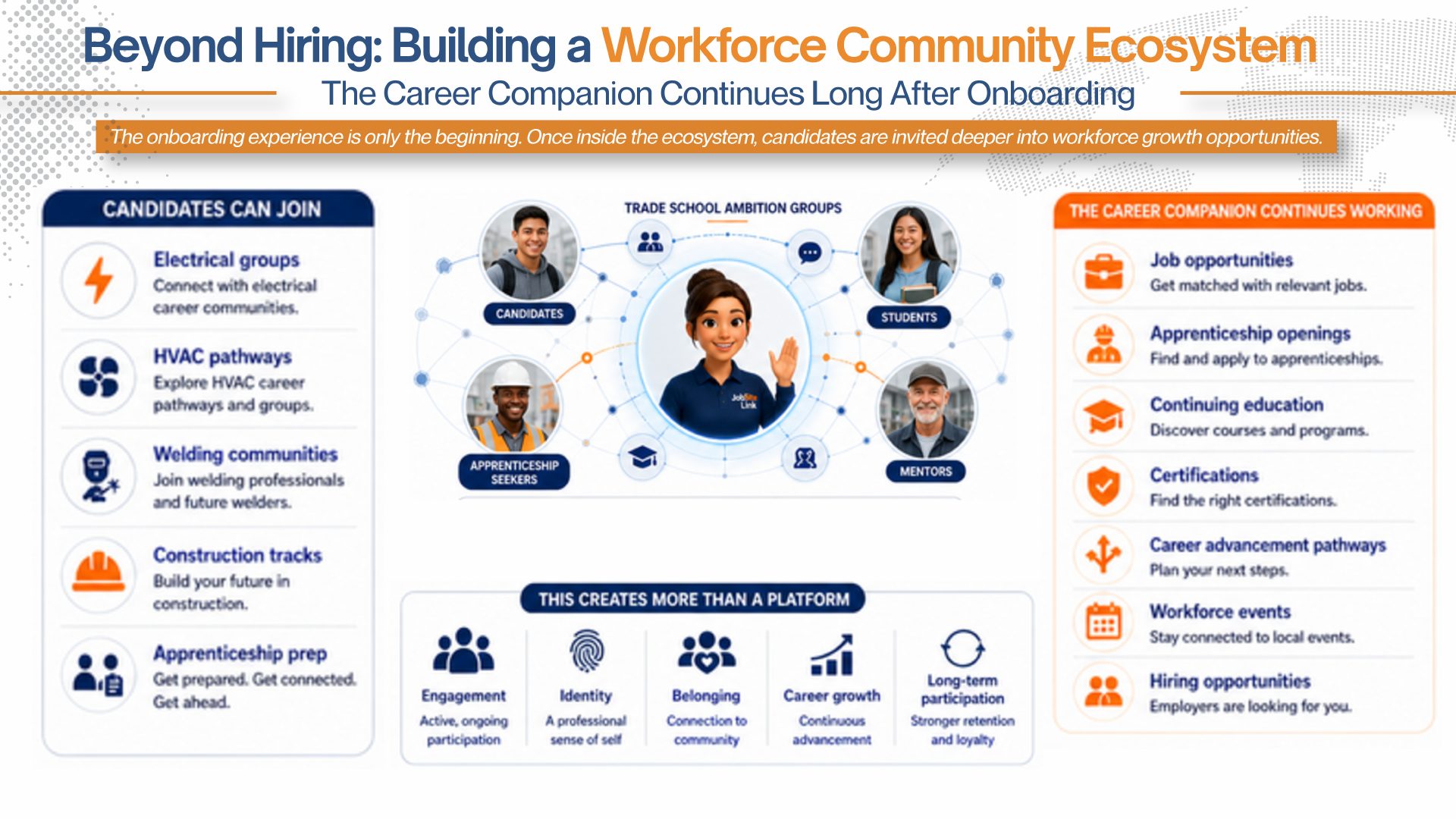
That gap is where SIXAM operates. JobSite Link is designed to be the infrastructure layer that connects every candidate, employer, trade school, union, apprenticeship program, and workforce nonprofit to the same intelligent system. One onboarding experience. One data layer. One pipeline — visible, measurable, and built for the scale this moment demands.
Who this moment belongs to.
This moment belongs to the 18-year-old in a public school who’s good with their hands and has never been told that’s a career. It belongs to the veteran transitioning from military service with technical skills that translate directly to the civilian trades. It belongs to the person coming home from incarceration looking for a second chance and a real wage. It belongs to the career changer who realizes that a desk job isn’t the only way to build wealth.
And it belongs to the employers, contractors, and program directors who’ve been building the trades ecosystem for years and are now seeing demand validate everything they’ve been working toward.
What has to happen now.
Opportunity without infrastructure is just a headline. To convert this moment into generational outcomes, the trades ecosystem needs three things:
- Visibility into the pipeline. The college system has had decades to build tracking, analytics, and outcome measurement. The trades have nothing comparable. We need a data layer that shows where candidates are, what they need, and how to connect them to the right opportunity at the right time.
- A single front door. Right now, entering the trades means navigating a maze of disconnected systems. One portal for apprenticeships, another for job boards, another for trade schools, another for union enrollment. The experience needs to be unified, guided, and intelligent.
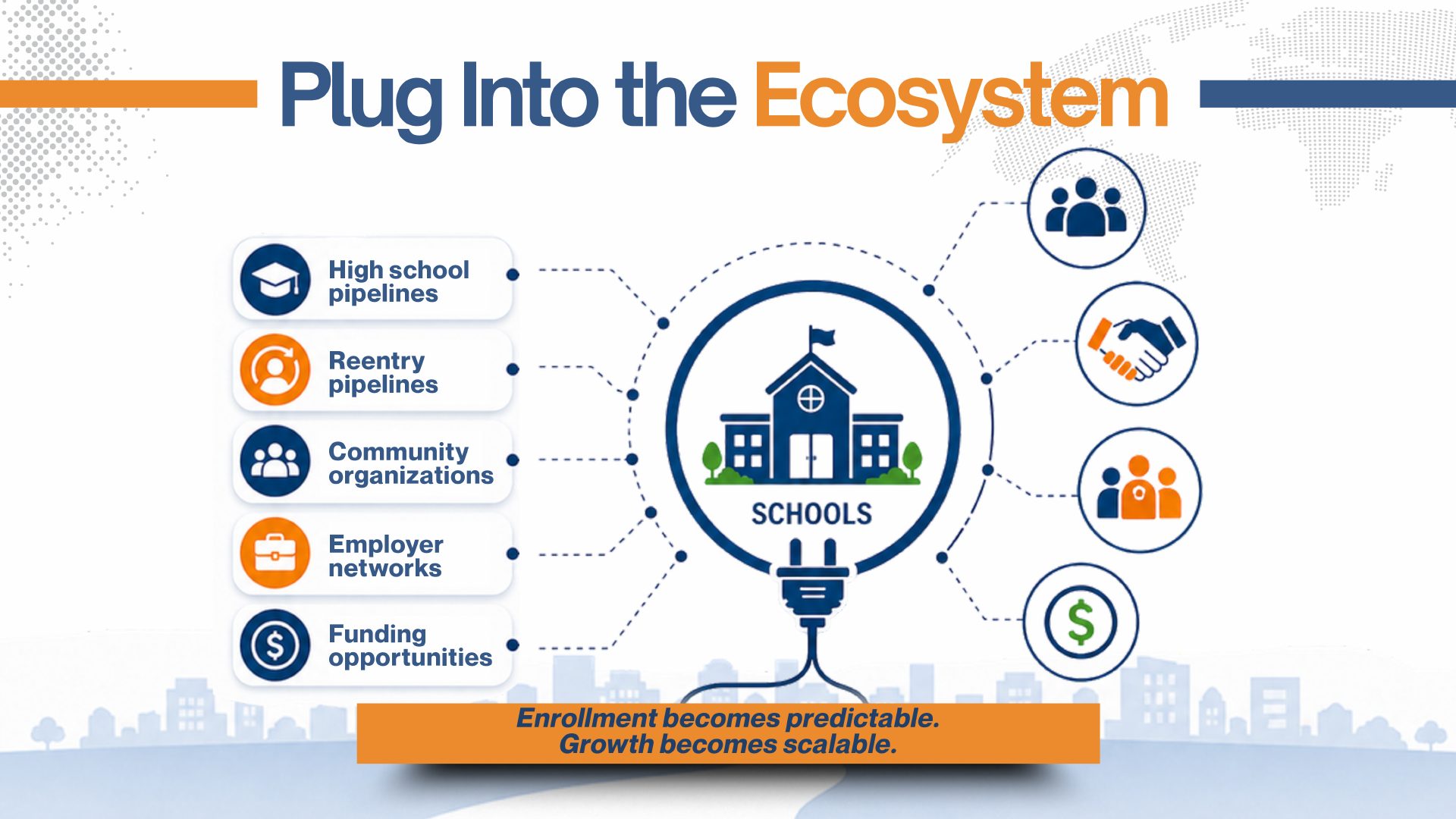
- Ecosystem coordination. Employers, training programs, unions, nonprofits, and government agencies all operate in silos. Workforce development only scales when these nodes are connected — when a candidate’s journey from awareness to employment is visible across the entire network.
This is exactly what SIXAM is building. Not a job board. Not a training program. A workforce infrastructure layer — the connective tissue that lets the trades economy operate at the scale this moment demands.
The clock is running.
The projects are funded. The demand is here. The culture has shifted. The only question is whether the workforce pipeline can scale fast enough to meet the moment.
If you’re a candidate: this is the best labor market for the skilled trades in modern American history. The leverage is yours.
If you’re an employer: the talent exists. But finding it requires a smarter system than what you’re using today.
If you’re a program director, a union leader, a nonprofit, or a public school administrator: the demand for what you do has never been higher. The infrastructure to connect your outcomes to the broader economy is what’s missing.
This is your time, trades. The question is whether we build the system to match the moment.